


Page 7 - CLT032320
P. 7
NEWS                                   MARCH 23, 2020 ¦ 7

         Sweeping Changes to Procedures,
          Schedules Amid COVID-19 Crisis

                                            By Robert Storace

The state bar association formed a
      COVID-19 Pandemic Task Force
      to help answer questions, and the
state Supreme Court has canceled oral
arguments from March 24 to April 2.

   Here’s a roundup of court directives
and rescheduling.

   In a directive that Chief Court Ad-
ministrator Patrick Carroll III issued
along with input from Connecticut
Supreme Court Chief Justice Richard
Robinson, the judicial district an-
nounced several changes that took ef-
fect Thursday.

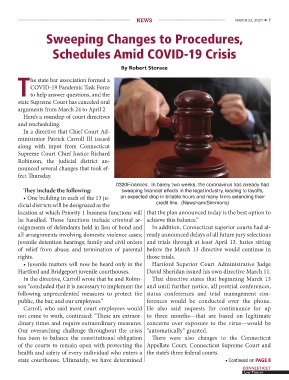
                                            0320Finances: In barely two weeks, the coronavirus has already had

They include the following:                 sweeping financial effects in the legal industry, leading to layoffs,

  • One building in each of the 13 ju-      an expected drop in billable hours and many firms extending their
dicial districts will be designated as the                       credit line. (Newsham/Simmons)

location at which Priority 1 business functions will that the plan announced today is the best option to
be handled. Those functions include criminal ar- achieve this balance.”
raignments of defendants held in lieu of bond and In addition, Connecticut superior courts had al-
all arraignments involving domestic violence cases; ready announced delays of all future jury selections
juvenile detention hearings; family and civil orders and trials through at least April 13. Juries sitting
of relief from abuse; and termination of parental before the March 13 directive would continue in
rights.                                           those trials.
• Juvenile matters will now be heard only in the Hartford Superior Court Administrative Judge
Hartford and Bridgeport juvenile courthouses.     David Sheridan issued his own directive March 11.
In the directive, Carroll wrote that he and Robin- That directive states that beginning March 13
son “concluded that it is necessary to implement the and until further notice, all pretrial conferences,
following unprecedented measures to protect the status conferences and trial management con-
public, the bar, and our employees.”              ferences would be conducted over the phone.
Carroll, who said most court employees would He also said requests for continuance for up
not come to work, continued: “These are extraor- to three months—that are based on legitimate
dinary times and require extraordinary measures. concerns over exposure to the virus—would be
Our overarching challenge throughout the crisis “automatically” granted.
has been to balance the constitutional obligation There were also changes to the Connecticut
of the courts to remain open with protecting the Appellate Court, Connecticut Supreme Court and
health and safety of every individual who enters a the state’s three federal courts.
state courthouse. Ultimately, we have determined
                                                                                      ¦ Continued on PAGE 8

                                                                                      CONNECTICUT
                                                                                       Law Tribune

