


Page 48 - CLT032320
P. 48
48 ¦ MARCH 23, 2020                        CLOSING ARGUMENT

                                           EDITORIAL BOARD

Harvey Weinstein and CT’s Sentencing
Guidelines Offer Opportunity for Review
More than two years after the
           first allegations against him
           emerged, Harvey Weinstein
was convicted of committing a crimi-
nal sex act in the first degree involving
one woman, H., in 2006 and rape in
the third degree involving another,
M., in 2013. He was acquitted of the
two more serious charges of preda-
tory sexual assault involving at least
two women (H. and S., and M. and S,
respectively) and one count of first-
degree rape (M.). (The conviction of
third-degree rape was as a lesser in-
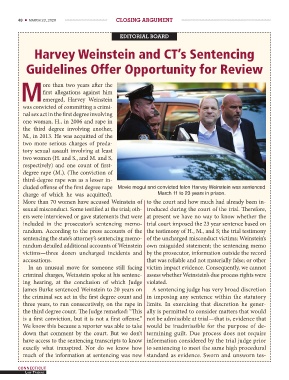
cluded offense of the first degree rape Movie mogul and convicted felon Harvey Weinstein was sentenced
charge of which he was acquitted).         March 11 to 23 years in prison.

More than 70 women have accused Weinstein of to the court and how much had already been in-
sexual misconduct. Some testified at the trial; oth- troduced during the court of the trial. Therefore,
ers were interviewed or gave statements that were at present we have no way to know whether the
included in the prosecutor’s sentencing memo- trial court imposed the 23 year sentence based on
randum. According to the press accounts of the the testimony of H., M., and S; the trial testimony
sentencing the state’s attorney’s sentencing memo- of the uncharged misconduct victims; Weinstein’s
randum detailed additional accounts of Weinstein own misguided statement; the sentencing memo
victims—three dozen uncharged incidents and by the prosecutor, information outside the record
accusations.                               that was reliable and not materially false; or other
In an unusual move for someone still facing victim impact evidence. Consequently, we cannot
criminal charges, Weinstein spoke at his sentenc- assess whether Weinstein’s due process rights were
ing hearing, at the conclusion of which Judge violated.
James Burke sentenced Weinstein to 20 years on A sentencing judge has very broad discretion
the criminal sex act in the first degree count and in imposing any sentence within the statutory
three years, to run consecutively, on the rape in limits. In exercising that discretion he gener-
the third degree count. The Judge remarked: “This ally is permitted to consider matters that would
is a first conviction, but it is not a first offense.” not be admissible at trial—that is, evidence that
We know this because a reporter was able to take would be inadmissible for the purpose of de-
down that comment by the court. But we don’t termining guilt. Due process does not require
have access to the sentencing transcripts to know information considered by the trial judge prior
exactly what transpired. Nor do we know how to sentencing to meet the same high procedural
much of the information at sentencing was new standard as evidence. Sworn and unsworn tes-

CONNECTICUT
     Law Tribune

