


Page 42 - CLT010421
P. 42
42 ¦ JANUARY 4, 2021                       EXPERT OPINIONS

                      Convicted Felons Are Still
                      Denied the Right to Vote

                               By Amanda McGinn and Zara Shore

Felony disenfranchisement, despite
      barring millions of Americans
      from voting each election, is not
a new topic.  But the issue came to the
forefront during this year’s presidential
election, after more than six million
Americans were deprived of the right
to vote in the 2018 midterms.
Today, convicted felons across the
country are still denied the right to
vote, and even D.C. prisoners face
barriers despite a recent change in
legislation guaranteeing them this
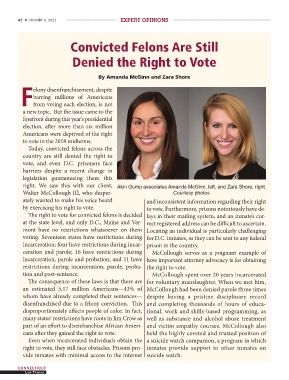
right. We saw this with our client, Akin Gump associates Amanda McGinn, left, and Zara Shore, right.
Walter McCollough III, who desper-
                                                            Courtesy photos

ately wanted to make his voice heard       and inconsistent information regarding their right
by exercising his right to vote.           to vote. Furthermore, prisons notoriously have de-
The right to vote for convicted felons is decided lays in their mailing system, and an inmate’s cor-
at the state level, and only D.C., Maine and Ver- rect registered address can be difficult to ascertain.
mont have no restrictions whatsoever on them Locating an individual is particularly challenging
voting. Seventeen states have restrictions during for D.C. inmates, as they can be sent to any federal
incarceration; four have restrictions during incar- prison in the country.
ceration and parole; 16 have restrictions during McCollough serves as a poignant example of
incarceration, parole and probation; and 11 have how important attorney advocacy is for obtaining
restrictions during incarceration, parole, proba- the right to vote.
tion and post-sentence.                    McCollough spent over 20 years incarcerated
The consequence of these laws is that there are for voluntary manslaughter. When we met him,
an estimated 5.17 million Americans—43% of McCollough had been denied parole three times
whom have already completed their sentences— despite having a pristine disciplinary record
disenfranchised due to a felony conviction.  This and completing thousands of hours of educa-
disproportionately affects people of color. In fact, tional, work and skills-based programming, as
many states’ restrictions have roots in Jim Crow as well as substance and alcohol abuse treatment
part of an effort to disenfranchise African Ameri- and victim empathy courses. McCollough also
cans after they gained the right to vote.  held the highly coveted and trusted position of
Even when incarcerated individuals obtain the a suicide watch companion, a program in which
right to vote, they still face obstacles. Prisons pro- inmates provide support to other inmates on
vide inmates with minimal access to the internet suicide watch.

CONNECTICUT
     Law Tribune

